
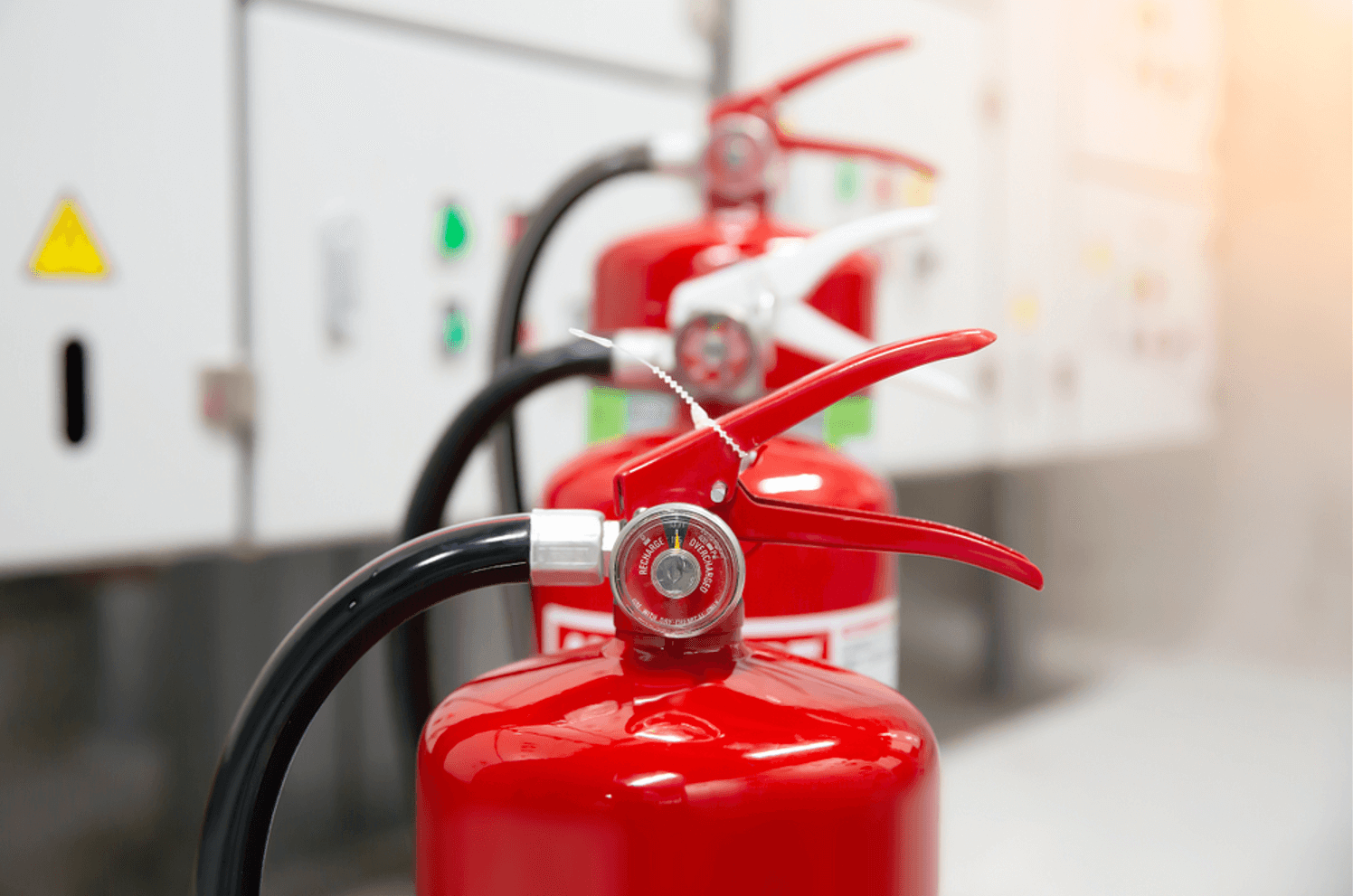
A fire extinguisher must be ready to operate when an emergency occurs. Regular inspection and servicing help identify damage, pressure loss, corrosion and other problems that may prevent an extinguisher from working correctly.
For many Australian buildings and workplaces, portable fire extinguishers maintained under AS 1851 receive routine service activities at six-monthly intervals. Yearly and five-yearly activities may also apply, depending on the extinguisher type, its condition, the installation and the requirements relevant to the property.
An extinguisher should also be assessed after it has been used, damaged, moved from its designated location or exposed to harsh environmental conditions.
Fire Extinguisher Servicing at a Glance
| Situation | Recommended action |
| Routine service date is approaching | Arrange inspection at the required interval |
| Extinguisher has been partly or fully discharged | Remove it from service and arrange assessment |
| Gauge is outside the operating range | Arrange professional inspection |
| Pin or tamper seal is missing | Do not rely on the extinguisher until it is checked |
| Hose, handle or nozzle is damaged | Arrange repair or replacement |
| Cylinder has dents, rust or corrosion | Stop handling it and obtain professional advice |
| Extinguisher fails a pressure test | Replace or condemn it as required |
| Fire hazards in the area have changed | Confirm that the extinguisher remains suitable |
These checks apply to common portable units, including ABE powder, carbon dioxide, water, foam and wet chemical extinguishers. Different service procedures can apply to each type.
What Happens During a Fire Extinguisher Service?
A professional service involves more than checking the pressure gauge.
Depending on the service interval and extinguisher type, a technician may:
- Check that the extinguisher is in its designated location
- Confirm that access is not blocked
- Inspect the cylinder for corrosion, dents or leakage
- Examine the hose, nozzle, handle, pin and tamper seal
- Check its pressure or weight
- Confirm that operating instructions remain legible
- Examine its mounting bracket and identification sign
- Review the manufacture date and previous maintenance records
- Determine whether further testing, repair or recharging is needed
- Update the maintenance tag and service documentation
Fire Protection Association Australia identifies six-monthly, yearly and five-yearly service activities for portable extinguishers under AS 1851.
How Often Should Fire Extinguishers Be Inspected in Australia?
Routine visual checks
Building managers, business owners and designated staff can conduct regular visual checks between scheduled services.
Check whether:
- The extinguisher is present and visible
- Access to it is clear
- The pressure indicator appears within its operating range
- The pin and tamper seal remain in place
- The hose and nozzle are unobstructed
- The cylinder has visible rust, dents or leakage
- The instructions and identification remain readable
- The maintenance tag is present
A visual check does not replace formal servicing. A gauge within the correct range does not confirm that every component is safe and serviceable. This guide to fire extinguisher maintenance checks provides more information for equipment owners.
Scheduled professional servicing
Portable extinguishers maintained under AS 1851 commonly receive six-monthly service activities, with additional activities undertaken at yearly and five-yearly intervals.
The applicable schedule can depend on the building, extinguisher, jurisdiction, manufacturer’s instructions and site requirements. Records should clearly show when each unit was inspected and what corrective work was required.
Fire Factory states that its portable extinguishers require five-yearly pressure testing when unused and undamaged, as well as six-monthly servicing for warranty purposes. Product-specific details should always be checked before arranging work.
When Does a Fire Extinguisher Need Refilling?
An extinguisher should be assessed after any discharge, even if only a small amount of extinguishing agent was released.
Common reasons for a refill or recharge include:
- Partial or complete discharge
- Pressure loss
- Leakage
- Failed weight or agent checks
- Maintenance procedures that require discharge
- Deteriorated or contaminated extinguishing agent
A refill may involve replacing the agent, repressurising the cylinder, inspecting internal components and fitting new seals.
So what about fire extinguisher refilling after partial use? A partly discharged extinguisher should not simply be returned to its bracket. Pressure may continue to fall, and the remaining contents may not provide the expected discharge performance.
Not every extinguisher is economical to refill. The unit’s size, type, condition, age and parts availability must be considered.
When Should a Fire Extinguisher Be Replaced?
Replacement may be necessary when:
- The cylinder has serious corrosion, dents or leakage.
- The extinguisher fails an inspection or pressure test.
- The operating instructions or identification are no longer readable.
- Replacement components are unavailable.
- The extinguisher is unsuitable for the current fire hazard.
- Its service history cannot be established.
- Repairs would cost close to the price of a suitable replacement.
- The manufacturer requires the unit to be retired.
There is no single universal expiry date that applies to every extinguisher. Its serviceable life depends on its construction, condition, maintenance history, pressure-test status and manufacturer’s requirements. When replacement is required, the new model must suit the fire risks within the area.
Should You Refill or Replace the Extinguisher?
Refilling may be appropriate when the extinguisher is rechargeable, the cylinder remains safe, replacement components are available and the unit passes the necessary inspections.
Replacement may be more sensible when the cylinder is damaged, the extinguisher is obsolete, its history is unknown or the cost of recharging and testing approaches the cost of a new unit.
A trained technician should make the final serviceability assessment.
Keep Fire Extinguishers Ready for an Emergency
Routine servicing helps identify defects before an extinguisher is needed.
Arrange an assessment when the service date is due, after any discharge, when the pressure has changed or when the cylinder shows damage or corrosion. Equipment should also be reviewed whenever building activities or fire hazards change.
Maintaining accurate service records and acting promptly on reported defects can help ensure each extinguisher remains accessible, suitable and ready for use.
Frequently Asked Questions
How often should a fire extinguisher be serviced in Australia?
Portable extinguishers maintained under AS 1851 commonly receive six-monthly routine service activities. Additional yearly and five-yearly activities may apply. Requirements can vary according to the equipment, building, jurisdiction and manufacturer’s instructions.
Does an unused fire extinguisher still need servicing?
Yes. An unused extinguisher can lose pressure, corrode or develop damaged components over time. It should continue to receive the inspections and servicing applicable to its installation.
Does a fire extinguisher need refilling after one use?
A partially or fully discharged extinguisher should be removed from normal service and professionally assessed. It may require recharging, testing or replacement before it can be returned to its designated position.
How can I tell whether a fire extinguisher needs replacing?
Warning signs include corrosion, dents, leakage, an abnormal pressure reading, missing components, illegible instructions and failed pressure testing. Replacement may also be necessary when the extinguisher no longer suits the fire hazard.
Can I service or refill a fire extinguisher myself?
Routine visual observations can be conducted by an equipment owner, but formal servicing, pressure testing and recharging should be performed by a competent provider using appropriate procedures and equipment.
About the Author


